Free Download Under the Mountain Wall: A Chronicle of Two Seasons in Stone Age New Guinea
Now, welcome guide vendor that will certainly come to be the best seller publication today. This is it publication. You may not feel that you are not aware of this publication, may you? Yeah, practically everyone knows about this publication. It will also undergo just how the book is really offered. When you could make the opportunity of the book with the good one, you can pick it based upon the reason and referral of exactly how guide will certainly be.
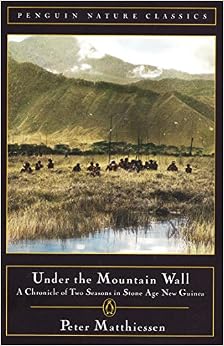
Under the Mountain Wall: A Chronicle of Two Seasons in Stone Age New Guinea

Free Download Under the Mountain Wall: A Chronicle of Two Seasons in Stone Age New Guinea
Outstanding product is currently available here. The book qualified Under The Mountain Wall: A Chronicle Of Two Seasons In Stone Age New Guinea is offered in this website as one of the most recent updated to offer. Yeah, this is one of advised publications that now many people look for guide. You could become one of those who are really fortunate today. You locate this website that will certainly provide you the best referral of this book.
Obviously, from childhood years to for life, we are always thought to love reading. It is not just reviewing the lesson book yet likewise reviewing every little thing good is the selection of obtaining brand-new ideas. Religion, sciences, politics, social, literature, as well as fictions will certainly improve you for not only one aspect. Having even more facets to know and recognize will certainly lead you come to be somebody a lot more priceless. Yea, becoming priceless can be positioned with the discussion of exactly how your knowledge a lot.
When you have made a decision to read it, you have decided to take one step to address the challenge. It can be done by then reviewing it. Reviewing Under The Mountain Wall: A Chronicle Of Two Seasons In Stone Age New Guinea can be a man selection to meet your leisures in everyday activity. It will be much better for establishing the soft documents of this book in your device so you could enjoy reviewing it whenever and any were.
And the reasons that you must select this advised book is that it's composed by a popular writer in the world. You could not have the ability to get this book quickly; this is why we provide you here to relieve. Being very easy to obtain the book to review in fact becomes the initial step to finish. Occasionally, you will encounter problems in discovering the Under The Mountain Wall: A Chronicle Of Two Seasons In Stone Age New Guinea outside. But here, you will not encounter that trouble.
About the Author
Peter Matthiessen was the cofounder of the Paris Review and is the author of numerous works of nonfiction, including In the Spirit of Crazy Horse, Indian Country, and The Snow Leopard, winner of the National Book Award.
Read more
Excerpt. © Reprinted by permission. All rights reserved.
Peter Matthiessen (1927–2014) is the only writer who has ever won the National Book Award in both fiction and nonfiction. His travels as a naturalist and explorer have resulted in more than a dozen books on natural history and the environment, including The Snow Leopard, his first NBA winner. Matthiessen’s equally important career in fiction has produced a collection of stories and nine novels, among them At Play in the Fields of the Lord (an NBA finalist) and the Everglades trilogy (Killing Mister Watson, Lost Man’s River, and Bone by Bone), which, rewritten and distilled, were published in one volume in 2008 under the title Shadow Country, winner of the NBA in fiction. Shadow Country was also the 2010 recipient of the William Dean Howells Medal, given by the American Academy of Arts and Letters for the most distinguished American novel published during the previous five years. Matthiessen was a member of the American Academy of Arts and Letters. His final novel, In Paradise, was published just after his death in 2014.UNDERTHEMOUNTAINWALLA chronicle of two seasonsin Stone Age New GuineaPETER MATTHIESSENPENGUIN NATURE CLASSICSNature is our widest home. It includes the oceans that provide our rain, the trees that give us air to breathe, the ancestral habitats we shared with countless kinds of animals that now exist only by our sufferance or under our heel.Until quite recently, indeed (as such things go), the whole world was a wilderness in which mankind lived as cannily as deer, overmastering with spears or snares even their woodsmanship and that of other creatures, finding a path wherever wildlife could go. Nature was the central theater of life for everybody’s ancestors, not a hideaway where people went to rest and recharge after a hard stint in an urban or suburban arena. Many of us still do hike, swim, fish, birdwatch, sleep on the ground or paddle a boat on vacation, and will loll like a lizard in the sun any other chance we have. We can’t help grinning for at least a moment at the sight of surf, or sunlight on a river meadow, as if remembering in our mind’s eye paleolithic pleasures in a home before memories officially began.It is a thoughtless grin because nature predates “thought.” Aristotle was a naturalist, and nearer to our own time, Darwin made of the close observation of bits of nature a lever to examine life in many ways on a large scale. Yet nature writing, despite its basis in science, usually rings with rhapsody as well—a belief that nature is an expression of God.In this series we are presenting some nature writers of the past century or so, though leaving out great novelists like Turgenev, Melville, Conrad, and Faulkner, who were masters of natural description, and poets, beginning with Homer (who was perhaps the first nature writer, once his words had been transcribed). Nature writing now combines rhapsody with science and connects science with rhapsody, and for that reason it is a very special and a nourishing genre.Edward HoaglandPreface The peaks of the Snow Mountains, on bright mornings, part the dense clouds and soar into the skies of Oceania. Beneath the clouds, like a world submerged, lie the dark rocks which form the great island of New Guinea; climbing abruptly from the Dampier Strait in the East Indies, the range extends eastward fifteen hundred miles until, at land’s end in Papua, it sinks once more beneath the ocean.The Snow Mountains are the summit of western New Guinea. On a high flank in the central highlands lies a sudden valley: here the Baliem River, which had vanished underground some twenty miles upstream, bursts from the mountain wall onto a great green plain. The plain itself, ten miles across, is a mile above the sea. Fifty miles southeast of the valley’s head, the river drops into a gorge and passes from the mountains, to subside at last in the vast marshes of sun and mud and sago palms stretching southward to the Arafura Sea.The Baliem Valley was discovered from the air in 1938, but no white man came to live there until 1954, when a government post was established on abandoned lands of the Wukahupi tribes. Dutch patrols have now explored much of the valley, which supports more than forty thousand people, and the last large blank on the most recent maps is a region of perhaps thirty square miles under the northeast wall.This remote corner is controlled by those tribes of the Ndani or Dani-speaking peoples known as the Kurelu; the Dani language, with small tribal variations, is spoken throughout the valley and beyond, yet it is but one of many distinct languages in the central highlands. (The origins of these languages, like the origins of the people themselves, are virtually unknown. One may suppose that the mountain Papuans came out from Asia long before the Polynesians—though in the wake of the Australian aborigines—and that they were forced into the mountains by peoples who came after, but the near absence of archaelogical evidence makes any attempt at chronology unintelligent.) The region is bordered in the south by the Aike River and in the west, toward the Baliem, by the lands of the enemy Wittaia. In the north and east it ends abruptly at the mountain wall. The wall rises in a series of steep ridges to an outer rim which varies, around the valley, from ten to twelve thousand feet in elevation; the upper wall is rarely seen. All day, all year, the clouds balance on the rim, as if about to tumble in. They are dark and still and all but permanent, protecting the great valley from infecting winds.The Kurelu are named for the tribal kain or leader: their country, that is, is “Kurelu’s Land.” The tribe is divided into four main groups: the Loro-Mabell to the northward, the Kosi-Alua from the western grasslands, the Haiman-Halluk, between the Kosi-Alua and the mountains, and the Wilihiman-Walalua, in the south. The Wilihiman-Walalua is the people’s contraction of four clan names (Wilil:Haiman-Walilo:Alua) and represents, politically, a union of allied villages. Several such unions, linked by clan or more or less well disposed toward one another, may form a loose confederacy and are led by the most powerful kain—in this case, Kurelu, kain of the Loro-Mabell. Their boundaries are fluid and informal, dependent on the predominance of clan, though the clans are spread throughout the villages. The clan Alua, for example, is well represented not only in the Wilihiman-Walalua but in the Kosi-Alua. The latter groups share a common frontier with the enemy and may be called the southern Kurelu.Because the southern Kurelu were entirely untouched by civilization, their culture was chosen for study by the Harvard-Peabody Expedition of 1961. The expedition, sponsored in part by the government of the Netherlands, entered the Baliem at the end of March and remained until September, with the cooperation and assistance of the Dutch officials, particularly Dr. Victor de Bruyn of the Office of Native Affairs. Its purpose was to live among the people as unobtrusively as possible and to film and record their wars, rituals, and daily life with a minimum of interference, in order that a true picture of a Stone Age culture—one of the few in which both war and agriculture are important—might be preserved.This book is a chronicle of two seasons in the Stone Age. The few details and episodes not actually witnessed by the author were supplied and confirmed by other members of the party—Robert Gardner, cameraman and leader of the expedition whose film, Dead Birds, concerns the Kurelu; Karl G. Heider, anthropologist; Jan Broekhuyse, anthropologist; Michael Rockefeller, photographer and sound technician. The expedition was joined by photographer Eliot Elisofon for the month of May; by botanist Chris Versteegh for two weeks in June; and by medical student Samuel Putnam in July and August; it was assisted immeasurably by the talents and good company of its Dani interpreter, Abututi, with his wife, Wamoko, and of its cook, Yusip.All of these have made important contributions to this book, but I am particularly indebted to Jan Broekhuyse, whose, year of prior experience with other Baliem tribes proved invaluable in the gathering and assessment of information, and to Karl Heider, who remained with the Kurelu after the departure of the expedition and has since supplied extensive data and corrections. Heider, Broekhuyse, and Gardner have been kind enough to inspect the manuscript for errors and distortions, and within the limits of our present understanding of the culture an honest portrait of the Kurelu has been attempted.This is the story of the great warrior Weaklekek and of the swineherd Tukum, of U-mue and his family, and of their enemies and friends. The events described were observed to have happened to these tribesmen, called by these names, in the spring and summer of 1961—though occasionally, minor actions of one person have been attributed to another, to avoid a confusing multiplicity of characters. The glossary in the back of the book will serve as a key to the dramatis personae as well as to pronunciation.Reference to the tribe’s exposure to the expedition has been omitted, not only because the first reactions of a wild people to the white man, affecting and sad and funny though they are, have been well documented, but because the Kurelu offered a unique chance, perhaps the last, to describe a lost culture in the terrible beauty of its pure estate. The armed patrols and missionaries invaded their land on the heels of the expedition, and by the time this account of them is published, the proud and warlike Kurelu will be no more than another backward people, crouched in the long shadow of the white man.Photographic Section I:THE KURELU23456789101112131415161718192021222324252627Under the Mountain Wall One morning in April, in the year when the old history of the Kurelu came to an end, a man named Weaklekek started down the mountain from the hill village of Lokoparek. He did not go by the straight path, which descends through a tangle of pandanus and bamboo onto the open hillsides, but instead went west, through the forest beneath the cliff. The cliff was a sheer face of yellow limestone black-smeared with green algae, and the tree line of its crest wavered in mist. With the sun rising behind it, the mist appeared illumined from within.The rains of April had been heavy, and the path was a glutinous mire pocked by the hooves of pigs; he walked it swiftly, his bare feet feeling cleverly for the root or rock that would give them purchase, and at the stream he ran across the log. The path climbed steeply to a grove of tropical chestnuts, tall, with small leaves of green-bronze, and there he paused a moment to peer out through the forest shades. Though he could not see it, the sun had mounted from behind the cliff. Below, the valley floor and its far wall steamed in an early light, but the forest would stay dank and somber until the cloud above his head had burned away.Weaklekek moved on to a point where the wood ended in a clearing between great boulders; the wood edge leapt with plants of light and shade, the most striking of which was a great rhododendron, its white blossoms broader than his hand. In the shadows and clefts of the boulders, wood ferns in wild variety uncurled from among the liverworts and lichens, the mosses and silver fungi. The ferns were the triumphant plant of the high forest, with species numbering in the hundreds, but Weaklekek was oblivious of the ferns, of all the details of his world which could not immediately be put to use. The ferns, like the mist hung on the cliffs, the squall of parrots echoing on the walls, the sun, the distant river, were part of him as he was part of them: they were inside him, behind the shadows of his brown eyes, and not before him. He would see a certain fern when he needed it for dressing pig, and another from which pith was taken to roll thread, but the rest withdrew into the landscape.The experience of his eye was not his own. It was thousands of years old, immutable, passed along as certainly and inevitably as his dark skin, the cast of his quick face. These characters were more variable than experience, for experience was static in the valley; it was older than time itself, for time was a thing of but two generations, dated by moons and ending with the day in which he found himself. Before the father of Weaklekek’s father was the ancestor of the people: his name was Nopu, and he came from the high mountains with a wife and a great bundle of living things. Nopu’s children were the founders of the clans, with names like Haiman, Alua, Kosi, Wilil, and they had opened the life bundle against Nopu’s will, releasing the mosquitoes and the snakes upon all the people, the akuni, who came after.Nopu was the common ancestor, but perhaps he was also that first Papuan who, one hour in the long infinity of days, from the forest of the mountain passes, saw the green valley of the Baliem River far below him in the sunny haze. How many years, or centuries of years, this man had wandered out of Africa and Asia may never be known, for he traveled lightly, and he left no trail.Before the coming of Nopu, in the millenniums of silence, the greatest of the valley’s creatures was a bird, the cassowary. Birds of paradise, red, emerald, golden, and night-blue, fluttered, huffed, and screeched among the fern and orchid gardens of the higher limbs. Hawks and swiftlets coursed the torpid airs, and the common sandpiper of Africa and Eurasia flew south like a messenger from another earth to teeter on the margins of its streams. In stands of great evergreen araucaria, in oak-chestnut forest and river jungle, a primitive fauna of small marsupials, with a few bats and rodents, prospered in habitats long since pre-empted, elsewhere on the earth, by the cats and weasels, dogs, bears, hoofed animals, and apes: the marsupials, stranded on these mountain outposts of the Australian continental shelf by the wax and wane of ice-age seas, became carnivores and insectivores and, in the wallabies and kangaroos, strange herbivores of the high grasslands.Then that first man—perhaps Nopu, perhaps another—reached the coast, and eventually the inner mountains; he occupied the valley, with his women and children, his bow, bamboo knife, and stone adze. Like the mountain wallaby, the cuscus, and the phalanger, he had cut himself off from a world which rolled on without him. The food in the valley forests was plentiful, and he had brought with him—or there came soon after—the sweet potato, dog, and pig. The jungle and mountain, the wall of clouds, the centuries, secured him from the navigators and explorers who touched the coasts and went away again; he remained in his stone culture. In the last corners of the valley, he remains there still, under the mountain wall. His name is not Nopu, for he is the son of Nopu’s son, but he is the same man.So now he paused to take in his surroundings, standing gracefully, his weight balanced on his right leg and upright spear. His right hand, holding the spear, was at the level of his chin, and the spear itself, sixteen feet long, rose to a point which drew taut, as he stood there, the stillness of the forest. The spear was carved from the red wood of the yoli myrtle, and a pale yoli, its smooth bark scaling like reptilian skin, stood like the leg of a great dinosaur behind him.Weaklekek was darker than most Dani, a dark brown which looked black, and the blackness of his naked body was set off by the white symmetries of his snail-shell bib. He looked taller than his five feet and a half, lean and cat-muscled, with narrow shoulders and flat narrow hips. At rest on the long spear, he gave an impression of indolent grace, a grace by no means gentle but rather a kind of coiling which permitted him to move quickly from a still position.He stood there watching, watching. The landscape as it was, had always been, his eye shut out. The stir of change, the detail out of place, was what he hunted: a distant movement, a stray smoke, a silence where a honey eater sang, a whoop of warning. Across the valley other men stood watching at this moment, under the long spear, for today there would be war.From where he stood, still as a snake, the southern territories of Kurelu’s Land spread before him. The narrow gully of the upper Aike dropped away on his left hand, the hill brush of its edges giving way as the land leveled to a riverain forest ruled by casuarina. Before him rose the smoke of morning fires, though the villages themselves—Abukumo, Homaklep, and Wuperainma—were not visible. On his right hand the cliff curved outward from the valley rim; it declined rapidly to a rocky hill, and finally a steep grassy slope, which plummeted for several hundred feet into a stand of giant araucarias at its foot. The three villages lay in a kind of pocket in the mountain flank, between the steep hill and the Aike River.The araucarias were straight and tall, well over one hundred feet, with tiers of branches curving upward, and needles clustered in great balls, like ornaments. The araucaria was an ancient tree, disappearing from the valley, from the world; each needle of this tree grew very old, refracting the sparkle of the dew for forty years and more.Directly below Wuperainma a small wood surrounded lowland brooks. The far part of the wood could be seen from where he stood, and beyond it a fringe of long-grass savanna, scattered with bushes, sloped to the bottom lands and drainage ditches of the sweet-potato fields. The bed of purple, veined by silver water, spread unbroken for a mile, ending at a far line of trees. Beyond the trees a marshy swale marked the frontier; it continued into no man’s land, surrounding a low rocky rise, the Waraba, and the near face of a pyramidal hill, the Siobara. The Siobara stood in Wittaia territory, and Wittaia fields and villages lay to both sides of it. Behind the Siobara a hairy spine of casuarina marked the course of the Baliem along the valley floor, and beyond the river a subsidiary valley mounted steeply to the cloud forest beneath the western walls.The trail wound down the slopes toward Wuperainma, passing alternately through low woodland and open brush; the bare feet of many years had beaten away the grass and the thin topsoil, laying bare the chalky white of a fine quartzitic sand. When dry, this sand was as soft as powder, but in the rain it glazed to a smooth hardness. The white sand erupted in great spots across the valley, and from where Weaklekek walked three patches of it could be seen, like snowfields, at the base of the Siobara and on the farther hills to the southwest.The limestone soil supported many plants in various stages of new flowering. Flowering and fading occurred in the same plant at once, the blossoms and burning leaves, for there was no autumn in the valley. The leaves died one by one and were replaced, so that the foliage of each plant was brilliant red and green against the hillside. The equatorial monsoons which brought a rainy season to the coasts had small effect here in the highlands; from moon to moon, the rainfall varied little. Winter, summer, autumn, spring were involuted, turning in upon themselves, a slow circling of time.Weaklekek moved swiftly down the mountain. At a certain point he paused and called out toward the cliff—We-AK-le-kek! And when the voice returned to him, AK-le-kek,-le-kek, he grinned uneasily, for this was the voice of his own spirit. On the lower slopes the pigeon, yoroick, called its own name dolefully, and from far below, where the sun was shining, the bird was answered by the high voice of a boy. At dawn that morning the enemy began chanting, and the chant, hoo, hoo, hoo, ua, ua, rolled across the fields toward the mountains. The fields were tattered still with mist, and a cloud hung on the valley floor, submerging the line of trees at the frontier. A man ran past the wood of araucaria, called Homuak after the spring which, rising silently from among the bony roots, flows out and dies in the savanna; Homuak lies at the foot of the steep hill near Wuperainma. He cried out urgently, his voice a solitary echo of the wail from behind the mist. The call was taken up on the far side of the hill and trailed off northward to the villages of Kurelu.The wood of Homuak was strangely empty. The black robin chat and a yellow whistler sang in the evergreens, in the rich voice of new nesting, and the night’s rain fell in soft drops from the needles. High behind the still village of Wuperainma the sun rolled up onto the rim, and the mists creeping on the fields slowly dispersed. Still the Wittaia chanted, and the answer grew in all the villages.A puna lizard, two feet long, with dinosaur spines and heavy head, crept out along a branch of araucaria, seeking the sun; its long whip tail, trailing behind, slid silently on the rough bark.Small bands of warriors were moving out toward the frontier. The men carried their spears and bows and arrows, and the boys ran behind them. A figure climbed slowly to the top of a kaio, one of the many lookout towers visible from the wood; the kaio is built of tall young saplings bound into a column by liana thongs, and rises to a stick platform some twenty-five feet above the ground. The kaios, erected in defense against raids upon the gardens, march across the distances like black lonely trees. At the base of each kaio is a thatched shelter, and here the warriors assembled, leaning their spears against the roof.Beyond the kaios and gardens lies a thin woodland, then a swale of cane and sedge, and at the far edge of the swale a solitary conifer. The tree marks the edge of the Tokolik, a grassy fairway nearly two miles long, paralleling the frontier. The Tokolik is the high ground of the swamp of no man’s land; on its far side a brushy bog occurs, scattered with dark tannin pools and reeds and sphagnum. The bog extends to the base of a low ridge, the Waraba, and beyond the ridge is the sudden pyramid, the Siobara, like a great fore bulwark of the enemy. In the middle of the Tokolik, just southward of the tree, lies a shallow grassy pool. Small streams have been diked to form the several pools on the frontier; black ducks with striped cinnamon heads frequent the pools, and the people know that the clamor of their flight might betray a raiding party of the enemy.From the foothills at the south end of the fairway the smoke of a Wittaia fire curled, to lose itself at last against the roll of cloud which cut the valley floor from the dark rim. Near the fire Wittaia warriors were ranked, their spear tips clean as lances on the sky. A larger group, convening on the Tokolik itself, raised a new howling, broken by rhythmic barks. Before the sun had warmed the air, three hundred or more Wittaia had appeared.At the north end of the Tokolik there is an open meadow. Here the main body of the Kurelu were gathering. Over one hundred had now appeared, and at a signal a group of these ran down the field to the reedy pool. On the far bank a party of Wittaia danced and called. The enemies shouted insults at each other and brandished spears, but no arrows flew, and shortly both sides retired to their rear positions. Because the war was to be fought on their common frontier, the majority of the Kurelu were Kosi-Alua and Wilihiman-Walalua—the southern Kurelu. The northern warriors were not obliged to fight, but the best men of even the most distant villages would appear.The sun had climbed over the valley, and its light flashed on breastplates of white shells, on white headdresses, on ivory boars’ tusks inserted through nostrils, on wands of white egret feathers twirled like batons. The alarums and excursions fluttered and died while warriors came in across the fields. The shouted war was increasing in ferocity, and several men from each side would dance out and feign attacks, whirling and prancing to display their splendor. They were jeered and admired by both sides and were not shot at, for display and panoply were part of war, which was less war than ceremonial sport, a wild, fierce festival. Territorial conquest was unknown to the akuni; there was land enough for all, and at the end of the day the warriors would go home across the fields to supper. Should rain come to chill them, spoil their feathers, both sides would retire. A day of war was dangerous and splendid, regardless of its outcome; it was a war of individuals and gallantry, quite innocent of tactics and cold slaughter. A single death on either side would mean victory or defeat And yet that death—or two or three—was the end purpose of the war, and the Kurelu, in April, were enraged. Two moons before, three wives of the Haiman kain Maitmo, with another woman and a man, had gone off to a pig feast held by clansmen in a nearby tribe; on their way they had been killed by the Wittaia, and though the Kurelu had come off best in the wars since, the score was not yet evened.Toward midmorning a flurry of arrows was exchanged, and the armies, each three or four hundred strong, withdrew once more. But soon a great shout rose up out of the distance, and the Kurelu answered it exultantly, hoo-ah-h, hoo-ah-h, hua, hua, hua, like a pack cry of wild dogs. From the base of the tree the advance parties ran to the hillock at the edge of the reed pool, mustered so close that the spears clashed. More companies came swiftly from the rear positions, bare feet drumming on the grass. Here and there flashed egret wands, or a ceremonial whisk; the whisk was made of the great airy feathers of the cassowary bound tight by yellow fiber of an orchid. The wands and whisks were waved in the left hand, while the spears were borne at shoulder level in the right. Four men had black plumes of the saber-tailed bird-of-paradise curling two feet or more above their heads; at the bases of these plumes shone feathers of parrots and other brilliant birds, carmine and emerald and yellow-gold, fixed to a high crown of fur and fiber.All wore headdresses of war. There were thin white fiber bands, and broad pandanus bands with the brown, gray, or yellow fur of cuscus, opossum, and tree kangaroo. There were crowns of flowers and crowns of feathers, hawk, egret, parrot, parakeet, and lory. Feather bands were stuck upon the forehead, black and shiny with smoke and grease, and matched pairs of large black or white feathers shot straight forward above the ears. Most common of all was a white solitary plume, bound to the forehead by its quill.On the black breasts lay bibs made up of the white faces of minute snail shells: the largest bibs contained hundreds of snails. Most of these were fastened to the throat by a collar of white cowrie shells, and some of the men wore, in addition, a section of the huge baler shell, called mikak; this spoon-shaped piece, eight inches long or more, was worn with its white concave surface upward, just beneath the chin. Over the centuries, the shells had come up from the coast on the obscure mountain trade routes; they were the prevailing currency of the valley, and a single mikak would purchase a large pig.Few of the men were entirely without decoration. Even the youngest warriors, the long-legged elege of fourteen to eighteen, wore strings of snails, or a lone feather in the dense wool of their hair. But here and there were naked men—naked, that is, but for the basic dress of every day, worn by all warriors in addition to the shells and fur and feathers: the tight armlets of the pith of bracken fern, braided beautifully upon the wrist or just above the elbow; black fiber strings, one or more, worn at the throat; and the horim, an elongated gourd worn by all but the smallest boys upon the penis. The horim is tied in an erect position by a fine thread of twig fiber secured around the chest; a second thread is looped through a small hole in the horim and down around the scrotum. The horim is often long enough to extend past its owner’s nipples, and is sometimes curled smartly at the tip; many are decorated with a dangling hank of fur.The advance warriors swept forward past the pool, reflections writhing on the windless water. The clamor increased as the Wittaia came on to meet them, led by a figure whose paradise plumes swayed violently above a head from which white feathers sprayed; he wore a boar’s tusk through his nostrils, hanging down like a white mustache. Both mikak and shell bib gleamed upon his breast, and staring white circles were painted around his eyes.Two armies of four to five hundred each were now opposed, most of the advance warriors armed with bows, a few with spears. They crouched and feinted, and the first arrows sailed high and lazily against the sky, increasing in speed as they whistled down and spiked the earth. Shrieks burst from the Wittaia, and a wounded Kurelu was carried back, an arrow through his thigh; he stared fearfully, both hands clenched upon a sapling, as two older men worked at the arrow and cut it out. Soon a second man returned, astride the shoulders of a comrade, for this is the way those wounded badly are taken from the field. The battle waned, renewed, and waned again; the fighting was desultory. The day was hot and humid, and as war demands a great amount of heroic leaping and running the warriors very much dislike the heat. But soon the Wittaia began a chanting, heightened by shrill special wails used little by the Kurelu—dtchyuh, dtchyuh, dtchyuh—woo-ap, woo-apwoo-r-d-a, woo-r-d-a—and the Kurelu ran down the Tokolik to battle, in a flying avalanche of feet, spears balanced at the right shoulder, tips angled down. Fighting broke out in the swampy brush toward the Waraba, and, as the line swayed back and forth, the bush fighters remained where they were, crouched down in ambush. A Wittaia low behind a bush, thinking himself unseen, leapt high with a screech as a long spear arched through the bush and caromed off him; he darted away, too shaken to retrieve it, for it had nearly run him through.Now a shout of derision burst from the Kurelu. On the crest of the Waraba, two hundred yards away, above the battle ground, thirty-odd warriors stood in silhouette. These were men of the Huwikiak clans, from a country two hours distant, on the far side of the Baliem. The territory of the Wittaia borders on the river, and the Huwikiak are Wittaia allies. These men had walked far for the fighting. They streamed down the bank into the swamp to join the battle.In the early afternoon there came a prolonged lull. The number of warriors was still increasing on both sides, and massed legions were spaced back along the Tokolik for nearly a mile in both directions. Rainstorms, like dirty smoke, filled the high mountain passes, but the clouds hung back along the walls. At the edge of the field a young warrior sighed in agony as an arrow with a long, toothed tip was worked from his forearm with a bamboo sliver.A wind sprang forward from the east, and the sky darkened. As if caught by the suspense before a rain, the warriors by the pool grew tense, and a Wittaia whoop, breaking the silence, was hurled back on waves of sound. A harrier hawk with a black head, coursing the battleground, flared off and away.The men assembled in their war parties, and the rear groups closed behind them. A warrior passing the wounded boy seized the bloody arrow as it was twisted free and ran with it toward the front: ordinarily the arrow is kept by the wounded man, and the old man who had removed it shook his head, as if shocked by this breach of custom, moving off toward the rear. The boy, deserted, stood up shakily, staring at the blood running away between his fingers. At the same time, he was proud, and the pride showed.A man without valor is kepu—a worthless man, a man-who-has-not-killed. The kepu men go to the war field with the rest, but they remain well to the rear. Some howl insults and brandish weapons from afar, but most are quiet and in-obtrusive, content to lend the deadwood of their weapons to the ranks. The kepu men are never jeered or driven into battle—no one must fight who does not choose to—but their position in the tribe may be determined by their comportment on the field. Unless they have strong friends or family, any wives or pigs they may obtain will be taken from them by other men, in the confidence that they will not resist; few kepu men have more than a single wife, and many of them have none.A kain with long hair in twisted cordy strings stalked forward, followed by another whose shoulders were daubed with yellow clay. U-mue came, in his huge mikak and tall paradise headdress, black grease gleaming in the hollows of his collarbones: the miraculous pig grease, blackened by the ash of grasses, is applied by all warriors whenever it is available, for it is sanctified by ceremony and contributes to morale and health as well as good appearance. It is worn by most men in their hair and on their foreheads, and sometimes in a broad bold band across the cheekbones and the nose, but U-mue smears it all over his head and shoulders, producing a black demonic sheen. He moved separately from the rest, for he claims to be a solitary fighter, with a taste for the treacherous warfare of the underbrush. In truth, he is rarely seen in action, and his claim to five kills is treated with more courtesy than respect. Among the warriors the numbers of kills are well established and are an important measure of degree of kainship.Despite his claims, U-mue is not thought of as a war kain: he is the village kain of Wuperainma and the political kain of the clan Wilil in the southern Kurelu. The positions of war, village, and political kain are quite separate, though all may be combined in the same man: Wereklowe, the village kain of Abulopak, is also political and war kain of the clan Alua, and one of the most powerful men in all the tribe. Above the kains of all the clans is the great kain Kurelu, and below them are the lesser and younger men with varying degrees of kainship, based on property as well as valor, family as well as worth. U-mue, with four wives and eleven pigs, is a rich man, and his wealth, in company with his ambition and a rare gift for intrigue, has brought him power.The fighting was closer and more vicious than that of the early skirmishes. More than a hundred men were actually in combat, as opposed to the twenty or thirty who had previously run out in the brief forays: the cries resounded to a strange, monotonous rhythm of twanged rattan bowstrings. The lines remained some fifty feet apart, but a few warriors moved out on the middle ground, crouched low, or down into the brushy swamp, stalking with spears. This is the dangerous fighting, for few men are killed by the thin bamboo arrows. Some may die afterward, but it is the spear which usually accounts for the rare kills made on the battlefield itself. The spear fighters in the brush beneath the Waraba kept low, for an arrow sailed at every upraised head. On the Tokolik, the battle line wavered back and forth, and at one point the Kurelu were swept back to the pool. Kurelu himself came forward then, and his men rallied. When the former line had been restored, the old man returned to the rear companies.Seated among the taller kains, Kurelu looks shrunken and obscure. The scars of an ancient fire burn have pinched his chest, and his dress is old and brown and simple. His face is intelligent and reflective, almost shy, and its power is not readily perceived. But Kurelu’s gentle smile is private, and his eyes are cold and deep, like small holes leading to infinity.Each little while a wounded man was carried back. One of these was Ekitamalek of the Kosi-Alua, with an arrow in the breast. Ekitamalek would die. The battle flew back and forth until, toward midafternoon, another long lull occurred. An hour passed, and the warriors of the far villages started off in single file for home. But on an instant fighting broke out again. It was led this time by Weaklekek, who was a war kain of the clan Alua and one of the great warriors: Weaklekek, with his broad brow and mighty grin, was presently in mild disgrace, having missed a fine chance in the last war to kill a Wittaia with his spear. As it was, he had found himself cut off and was saved at the last moment only by a wild foray and flurry of arrows shot by two of his men.A number of warriors had now been wounded, but no one had been killed on either side, and the fighting continued until dusk. The warriors whooped and ducked and came up grinning in an access of nervous ferocity, much like the boys with their grass spears on the homeward paths of twilight. The four wives owned by U-mue do not all live in Wuperainma, partly because one or more must tend his pigs up on the mountain, and partly because Hugunaro and Ekapuwe fill the village with their fighting. In consequence, Ekapuwe, who is pregnant, has been sent to the pig village of Lokoparek, while the other three work in their husband’s fields.
Read more
Product details
Series: Classic, Nature, Penguin
Paperback: 320 pages
Publisher: Penguin Classics; Reprint edition (January 6, 1987)
Language: English
ISBN-10: 9780140252705
ISBN-13: 978-0140252705
ASIN: 0140252703
Product Dimensions:
5.1 x 0.7 x 7.7 inches
Shipping Weight: 3.2 ounces (View shipping rates and policies)
Average Customer Review:
4.4 out of 5 stars
15 customer reviews
Amazon Best Sellers Rank:
#712,697 in Books (See Top 100 in Books)
Terse and to the point, a companion to "Gardens of War: Life and Death in the New Guinea Stone Age", by Gardner and Heider. Matthiessen follows several people around and diaries their daily life including their social interactions.There is also a documentary called "Dead Birds" that has unvarnished (and chilling) footage of daily life in the stone age highlands.
I inadvertently attached this review to the paperback addition. I read the Kindle version."Under the Mountain Wall" by Peter Matthiessen tells of the people in Stone Age New Guinea. At the time the book was written (1962) these people had little or no contact with modern civilization. It takes little stretch of the imagination to visualize our own ancestors of 15,000 years ago. The weakness of this book for the modern reader is the author's use of numerous native names and locals. Even though there is a glossary of terms at the end, the use of common nouns would have been appreciated. Personal names such as "Asikanalek", "Elomaholan", "Namilike" almost have the sound of Old Testament characters, but are difficult to remember and differentiate. Would it have been against the rules to give them common pseudonyms like "John", "Tom", or "Fred"? A much more readable book on the subject is Jared Diamond's "The World Until Yesterday".
a very thought provoking work, difficult to read at first, because the names are so difficult. The glossary helps. the photographs are difficult black and white. but the questions raised by the book about people making war for entertainment are very thought provoking!
Great reading of a way of life that doesn't exist anylonger
Matthiessen's writing is literature and inspiring.
interesting excursion into New Guinea and the people there...and where Michael Rockafeller lost his life.
Excellent. Arrived quickly
This is one of Peter Matthiesen's early books in which he chose to write as an unseen and unmentioned observer, which does not work for me. The book is not for the faint of heart as barbaric practices; mutilation, rape, murder are described in graphic detail. That said, the book is a gold mine of New Guineans ancient tribal practices and would be interesting reading for anthropologists. One of a series of Penguin Nature books, the publishers should be ashamed of the photographs reproduced in the book. They look like sixth generation photocopies, are murky and make it impossible to see any detail. Mr. Matthiesen deserves better. As a fan of Peter Matthiesen (The Snow Leopard is a superb book) it seems to me that this book was written before he developed his mature style,
Under the Mountain Wall: A Chronicle of Two Seasons in Stone Age New Guinea PDF
Under the Mountain Wall: A Chronicle of Two Seasons in Stone Age New Guinea EPub
Under the Mountain Wall: A Chronicle of Two Seasons in Stone Age New Guinea Doc
Under the Mountain Wall: A Chronicle of Two Seasons in Stone Age New Guinea iBooks
Under the Mountain Wall: A Chronicle of Two Seasons in Stone Age New Guinea rtf
Under the Mountain Wall: A Chronicle of Two Seasons in Stone Age New Guinea Mobipocket
Under the Mountain Wall: A Chronicle of Two Seasons in Stone Age New Guinea Kindle
Under the Mountain Wall: A Chronicle of Two Seasons in Stone Age New Guinea PDF
Under the Mountain Wall: A Chronicle of Two Seasons in Stone Age New Guinea PDF
Under the Mountain Wall: A Chronicle of Two Seasons in Stone Age New Guinea PDF
Under the Mountain Wall: A Chronicle of Two Seasons in Stone Age New Guinea PDF